Written by
Christopher Callaghan
Published on
February 10, 2026

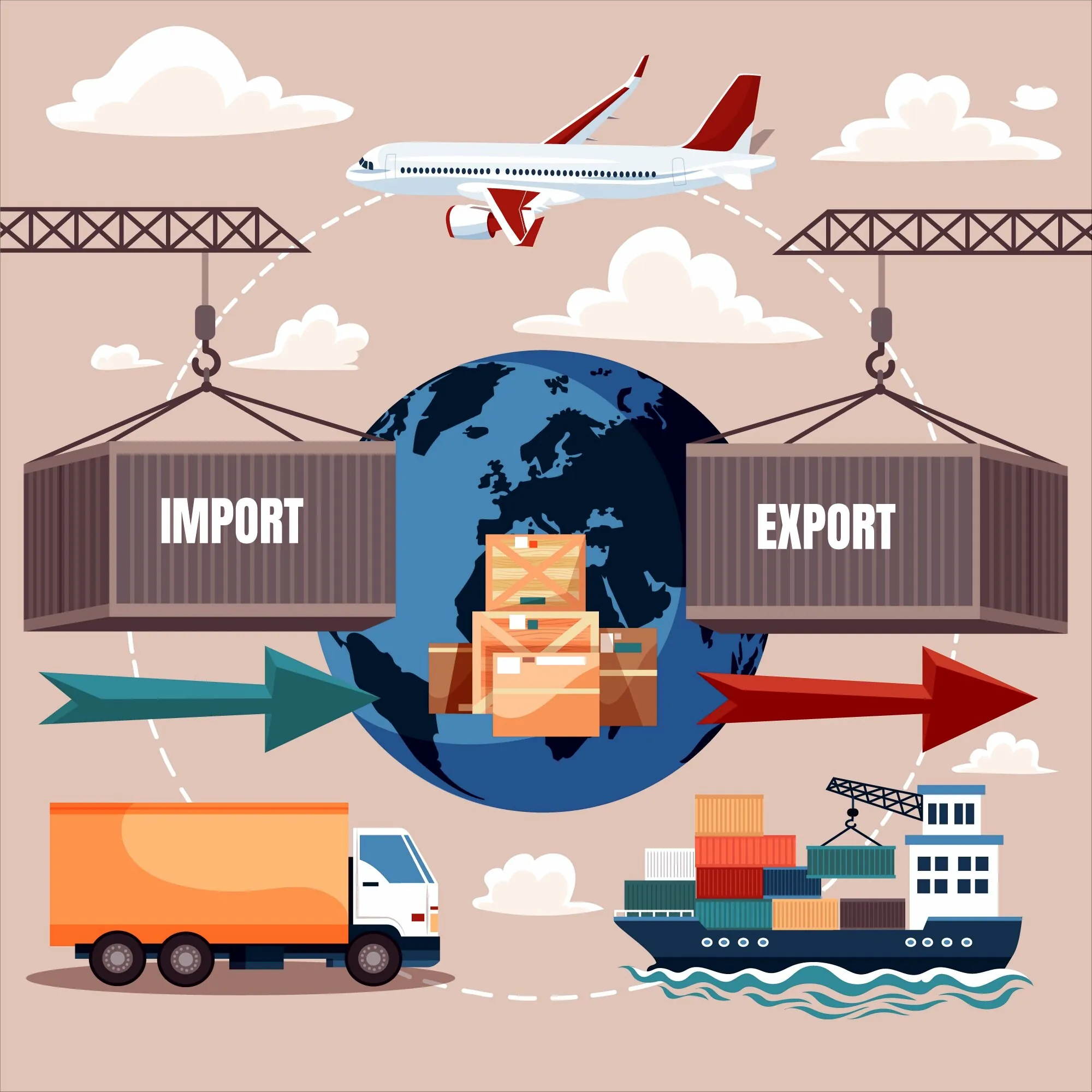
International trade is the backbone of the global economy, with millions of goods
exchanged daily across borders. A critical component of this complex process is the set
of predefined commercial terms known as Incoterms, which stand for International
Commercial Terms. These terms are published by the International Chamber of
Commerce (ICC) and provide a common framework to determine the responsibilities of
buyers and sellers in international transactions. This white-paper explores the history,
structure, and application of Incoterms, highlighting their significance in global trade.
Recently, I was assisting an international company set up a plan whereby they could
assist a timber grower on one continent sell and ship its timber to a buyer on another
continent. As one of my staff members was reading my outline, he asked me, “What is
an Incoterm”. It was the end of the day, so I simply replied, “It just a term in the
agreement dealing with shipping goods.” I felt bad for giving such an incomplete
answer, so I decided to write this white-paper.
Incoterms are a set of internationally recognized rules that define the responsibilities of
sellers and buyers for the delivery of goods under sales contracts. First introduced in
1936, Incoterms are designed to reduce uncertainties arising from different
interpretations of rules in different countries. By providing a standard, they facilitate
smoother international trade transactions and minimize legal disputes.
The first Incoterms were published in 1936 by the International Chamber of Commerce
to address the lack of uniformity in international trade practices. Over the years, the ICC
has revised Incoterms periodically to reflect changes in trade practices and logistics.
The latest version, Incoterms 2020, includes updates to address the evolving landscape
of global trade.
Incoterms 2020 consists of 11 terms, which are divided into two categories based on the
mode of transport:
Multimodal Transport Terms: Applicable to any mode of transport, including EXW,
FCA, CPT, CIP, DAP, DPU, and DDP.
Maritime Transport Terms: Applicable only to sea and inland waterway transport,
including FAS, FOB, CFR, and CIF.
EXW (Ex Works): The seller makes the goods available at their premises. The buyer is
responsible for all costs and risks involved in transporting the goods to their destination.
FCA (Free Carrier): The seller delivers the goods to a carrier or another person
nominated by the buyer at the seller’s premises or another named place.
CPT (Carriage Paid To): The seller pays for the carriage of the goods to the named
place of destination. The risk passes to the buyer when the goods are handed over to
the carrier.
CIP (Carriage and Insurance Paid To): The seller pays for the carriage and insurance
to the named place of destination. The risk passes to the buyer upon delivery to the
carrier.
DAP (Delivered At Place): The seller delivers when the goods are placed at the
disposal of the buyer on the arriving means of transport ready for unloading at the
named place of destination.
DPU (Delivered at Place Unloaded): The seller delivers and unloads the goods at the
named place of destination.
DDP (Delivered Duty Paid): The seller delivers the goods to the buyer, cleared for
import and all applicable duties paid at the named place of destination.
FAS (Free Alongside Ship): The seller delivers when the goods are placed alongside
the vessel at the named port of shipment.
FOB (Free On Board): The seller delivers the goods on board the vessel nominated by
the buyer at the named port of shipment.
CFR (Cost and Freight): The seller pays for the cost and freight to bring the goods to
the port of destination. The risk transfers to the buyer once the goods are loaded on
board the vessel.
CIF (Cost, Insurance, and Freight): The seller pays for the cost, insurance, and freight
to bring the goods to the port of destination. The risk transfers to the buyer once the
goods are loaded on board the vessel.
Incoterms play a crucial role in risk management by clearly defining when the risk of
loss or damage to the goods transfers from the seller to the buyer. This clarity helps in
mitigating disputes and ensuring smoother transactions. For instance, under CIF terms,
the seller's responsibility includes obtaining insurance, thereby providing additional
security to the buyer.
Compliance with Incoterms is essential for legal certainty in international trade. Incorrect
use of Incoterms can lead to legal disputes, increased costs, and delays. Therefore, it is
crucial for businesses to understand the legal implications of each term and ensure that
their contracts clearly specify the chosen Incoterm.
An electronics manufacturer in Japan sells goods to a retailer in Germany under CIF
terms. The manufacturer covers the cost, insurance, and freight to the port of Hamburg.
Once the goods are loaded on the vessel, the risk transfers to the retailer. This
arrangement ensures that the retailer is protected against potential losses during sea
transport.
An agricultural exporter in Brazil sells coffee beans to a buyer in the United States
under FOB terms. The exporter is responsible for loading the beans onto the vessel at
the port of Santos. The buyer bears all costs and risks from that point onwards. This
clear division of responsibilities helps in efficient risk management and cost allocation.
As global trade continues to evolve, Incoterms are expected to adapt to new challenges
and opportunities. Emerging technologies, such as blockchain and digital trade
platforms, are likely to influence the future of Incoterms by enhancing transparency and
efficiency in international transactions. Additionally, environmental considerations and
sustainability practices may lead to the introduction of new terms or modifications to
existing ones.
Incoterms are a fundamental aspect of international trade, providing a standardized
framework that helps reduce uncertainty and facilitate smooth transactions.
Understanding and correctly applying Incoterms can significantly enhance risk
management, legal compliance, and overall efficiency in global trade operations. As the
landscape of international commerce continues to evolve, staying informed about the
latest developments in Incoterms will be crucial for businesses to remain competitive
and successful.
Christopher Callaghan is an attorney practicing in both Domestic and International
Business Law. If your business needs an attorney, please get in touch with Christopher
Callaghan today at (251) 285-3425 to schedule your consultation.